Introduction
Biologics get most of the headlines, but small molecules still dominate the approval pipeline. Of the 46 novel drugs the FDA's CDER cleared in 2025, 30 were conventional small molecules, roughly 65.2% of approvals, according to a peer-reviewed molecular classification published in 2025.
Yet sponsors without deep in-house expertise often struggle to navigate the path from target identification to a clinical-ready candidate. The process involves years of screening, optimization, and safety testing before a molecule ever reaches a patient.
This guide breaks down what small molecules are and how they move through discovery. It also covers where they show up in medicine cabinets today, and how the right research partner can keep a program moving.
Key Takeaways
- Small molecules are low molecular weight compounds (under 900 daltons) that penetrate cells and bind biological targets
- They remain the dominant drug class thanks to oral bioavailability, manufacturing simplicity, and lower relative cost
- Discovery spans target identification, screening, lead optimization, and preclinical candidate selection
- AI and computational modeling are cutting synthesis volume and timelines in select programs
- An experienced CRO/CDMO partner can shorten the road from lab bench to clinic
Understanding Small Molecules: Definition, Characteristics, and How They Compare to Biologics
A small molecule is generally defined as an organic compound with a molecular weight around or below 900 Da, according to the NIH's regulatory knowledge guide. It's a practical convention rather than a strict legal cutoff.
Chemist Christopher Lipinski's Rule of Five adds a practical filter for oral drug-likeness. Poor absorption becomes more likely when a compound has:
- More than 5 hydrogen-bond donors
- More than 10 hydrogen-bond acceptors
- Molecular weight above 500 Da
- LogP (fat solubility) above 5
Compounds with one or fewer violations are typically classified as Rule-of-Five compatible, though plenty of effective drugs break the pattern.
Key Characteristics That Define Small Molecule Drugs
Size drives function here. A low molecular weight lets these compounds passively diffuse across cell membranes and survive gastrointestinal absorption, which is exactly why so many small molecule drugs come as pills rather than injections.
Mechanistically, small molecules bind enzymes, receptors, or proteins to inhibit, activate, or otherwise modulate a biochemical pathway. That precision is what makes a statin lower cholesterol or a kinase inhibitor block a cancer cell's growth signal.
On the manufacturing side, chemical synthesis is scalable and comparatively affordable. Most small molecules are also shelf-stable at room temperature, which simplifies storage, shipping, and distribution, especially in regions with limited cold-chain infrastructure.
Small Molecules vs. Large Molecules (Biologics): What's the Difference?
| Attribute | Small Molecules | Biologics |
|---|---|---|
| Source | Chemically synthesized | Derived from living organisms |
| Administration | Often oral | Usually injection or infusion |
| Structural complexity | Well-defined, simple structures | Complex, process-dependent |
| Immunogenicity | Generally lower | Anti-drug antibody risk is a known concern |
| Manufacturing cost | Generally lower | Generally higher |
Neither class is "better." Small molecules handle broad systemic conditions like hypertension or infection well, while biologics excel at highly targeted therapies, including certain cancers and autoimmune diseases. Most modern pipelines lean on both.
The Small Molecule Drug Discovery Process: From Target to Clinical Candidate
Getting from an idea to a viable clinical candidate follows a fairly consistent arc, even as tools evolve.
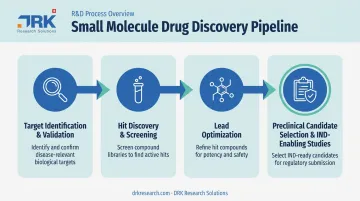
1. Target Identification & Validation Researchers pinpoint a disease-relevant enzyme, receptor, or protein and confirm its role using genomic, proteomic, or disease-model data. Get this step wrong, and everything downstream is wasted effort.
2. Hit Discovery & Screening High-throughput screening (HTS) tests enormous compound libraries against the target. A 2010 industry survey found primary screens averaged 505,530 compounds, with 0.1 to 1 million compounds being the most common range, according to Compound Profiling data published by DDW.
Hit rates from these screens typically land below 1%, meaning most of that library produces nothing usable.
AI and computational modeling are increasingly narrowing this haystack before physical screening even begins.
3. Lead Optimization Chemists refine hit compounds through structure-activity relationship (SAR) studies, adjusting the chemical structure to improve:
- Potency and selectivity for the target
- ADMET properties (absorption, distribution, metabolism, excretion, toxicity)
- Metabolic stability and reduced off-target liabilities, including hERG channel risk
4. Preclinical Candidate Selection & IND-Enabling Studies The optimized lead undergoes toxicology, pharmacokinetic, and safety pharmacology testing, typically covering cardiovascular, central nervous system, and respiratory effects per ICH S7A standards. This data package supports an Investigational New Drug (IND) application.
This handoff point, discovery to clinical development, is often where momentum stalls. Sponsors juggling multiple vendors for toxicology, formulation, and regulatory filing frequently lose weeks to miscommunication alone. An integrated partner who can carry the program from IND-enabling work into Phase I trials tends to avoid that gap entirely.
Real-World Examples and Applications of Small Molecule Drugs
Small molecules have shaped medicine for over a century, and the examples are more familiar than most people realize.
- Aspirin – irreversibly acetylates COX enzymes to reduce inflammation and pain; the pure compound was synthesized in 1897
- Penicillin – disrupts bacterial cell wall synthesis; discovered in 1928, therapeutic use began in the 1940s
- Statins – inhibit HMG-CoA reductase to lower cholesterol; lovastatin became the first FDA-approved statin in 1987
- Ibuprofen – blocks COX-1 and COX-2 to reduce inflammation and pain; approved by prescription in 1974
Modern small molecule development has moved well beyond these general-purpose drugs. Imatinib, approved in 2001, inhibits the BCR-ABL tyrosine kinase driving chronic myeloid leukemia, an early proof that small molecules could deliver precision oncology, not just symptom relief.
That range, from a headache tablet to a targeted cancer therapy, shows why small molecules still cover more therapeutic ground than any other drug class. They treat everyday chronic conditions and life-threatening cancers alike.
Key Challenges and Emerging Trends in Small Molecule Drug Discovery
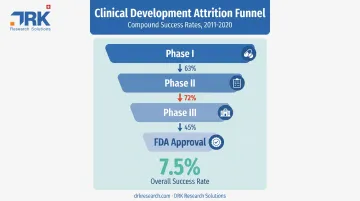
Discovery success is far from guaranteed. Attrition data from 2011-2020 paints a stark picture: compounds entering Phase I have only a 7.5% chance of reaching approval, according to a BIO industry report on clinical development success rates. The steepest drop happens between Phase II and Phase III, where attrition hits 72%.
Beyond attrition, teams wrestle with:
- Finding viable candidates among libraries of hundreds of thousands of compounds
- Managing solubility and bioavailability problems that surface late in development
- Balancing potency against off-target toxicity
AI is starting to change the math on these challenges. One widely cited case involved a small-molecule TYK2 inhibitor that reached clinical trials in roughly 4.5 years, after synthesizing just 300 to 500 molecules compared with the 5,000 to 10,000 typically required with conventional methods.
Independent verification across broader programs is still catching up. Still, the direction is clear: fewer wasted syntheses, faster iteration.
A related trend worth watching is the rise of antibody-drug conjugates (ADCs), hybrid therapies pairing a targeting antibody with a potent small molecule payload. Thirteen ADCs had FDA approval by April 2023, signaling how small molecule chemistry keeps finding new roles even as biologics grow.
Why Partner with an Experienced CRO/CDMO for Small Molecule Development
Moving a candidate from discovery through IND submission and into manufacturing scale-up demands regulatory fluency most sponsors don't maintain in-house. Coordinating toxicology data, formulation work, and dossier preparation across separate vendors introduces exactly the kind of delay that stalls momentum.
DRK Research Solutions works across this continuum. Our capabilities span:
- Clinical trial operations from Phase II through Phase IV
- Generics and hybrid product development for regulated markets
- eCTD dossier preparation covering Modules 2-5, integrating technical, nonclinical, clinical, and CMC data
- Lab-scale formulation development and ICH/USP-aligned analytical method validation
What sets this apart is the network behind it. DRK operates across Europe, the Middle East, Asia, Africa, and the Americas, with on-ground teams that navigate EU GMP, US FDA, MHRA, WHO PQ, and PIC/S requirements. No single overseas office routes every decision.
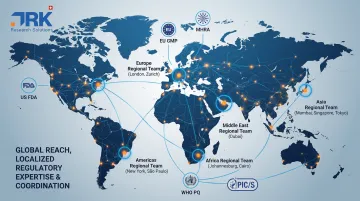
For sponsors targeting underserved and low- and middle-income markets, that localized regulatory fluency, paired with global CRO/CDMO integration, often makes the difference between a program that stalls and one that reaches patients.
If you're weighing how to structure your next small molecule program, connect with DRK's team to talk through your specific development needs.
Frequently Asked Questions
What are small and large molecules?
Small molecules are low molecular weight, chemically synthesized compounds, typically under 900 Da. Large molecules (biologics) are complex proteins produced by living organisms, generally requiring injection and more careful handling.
What are examples of small molecules?
Aspirin, ibuprofen, penicillin, and statins are classic examples. Imatinib, a kinase inhibitor used in leukemia treatment, represents the modern, targeted end of the category.
Are small molecules drugs?
Yes. Most approved pharmaceuticals are small molecules, distinct from protein-based biologic drugs, which make up a smaller but growing share of new approvals.
How long does the small molecule drug discovery process typically take?
Discovery through preclinical candidate selection generally takes several years, typically averaging around six years for discovery plus preclinical work combined. Timing varies with target complexity and screening approach.
What is the difference between drug discovery and drug development?
Discovery covers identifying and optimizing a candidate compound, from target identification through lead optimization. Development picks up from there, covering preclinical/clinical testing and regulatory approval.
Can small molecule drugs treat cancer?
Yes. Targeted small molecule therapies, particularly kinase inhibitors like imatinib, are widely used in oncology, often alongside biologics and combination treatment regimens.