Introduction
Every finished drug, whether it's a tablet, an injectable, or a biologic, starts as a raw material sitting in a supplier's warehouse. Safety and efficacy aren't decided in the clean room. They're decided the moment a sourcing team picks a vendor.
Many manufacturers treat raw material sourcing as a procurement task rather than a quality decision. That mindset has cost lives.
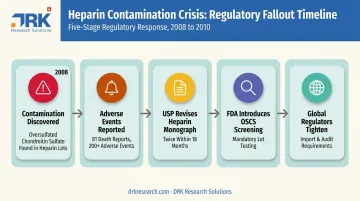
In 2008, contaminated heparin linked to oversulfated chondroitin sulfate triggered a global recall. A New England Journal of Medicine investigation tied the contamination to more than 200 adverse events, including 81 deaths, in the United States, prompting a full overhaul of how regulators screen incoming materials.
This guide covers why sourcing matters, the material categories involved, actionable best practices, the compliance landscape, and the common challenges sourcing teams face today. We'll also look at how CRO partners like DRK Research Solutions strengthen sourcing oversight through regulatory compliance consulting.
Key Takeaways
- Raw material quality is a critical quality attribute, not a procurement checkbox
- ICH Q8–Q11 require documented supplier qualification, traceability, and change control
- Country of origin doesn't determine safety; supplier audit history does
- Falsified excipients like contaminated propylene glycol still surface in global supply chains
- Diversified, well-audited supplier networks reduce both compliance and shortage risk
Why Raw Material Sourcing Is Critical in Pharma
Raw material quality determines drug safety and efficacy long before formulation begins. A contaminated or substandard input can undermine an otherwise flawless manufacturing process. That's why regulators now treat sourcing as a critical quality attribute rather than a line item on a purchase order.
The Heparin Lesson
The 2008 heparin crisis remains the clearest example of what happens when sourcing oversight fails. Suspect lots contained oversulfated chondroitin sulfate, a cheaper substitute that mimicked heparin's activity but triggered dangerous immune reactions in patients.
The FDA received 81 death reports involving allergic-type reactions in heparin patients between January 2007 and April 2008. A later review confirmed only three deaths as probably linked to the contamination itself. That distinction matters for accuracy, but it doesn't diminish the scale of the response the crisis forced, as detailed in a 2013 PMC clinical review of the heparin contamination.
The fallout was significant:
- USP revised its heparin monograph twice within 18 months
- FDA introduced new OSCS screening methods and mandated lot-by-lot testing of crude heparin
- Global regulators tightened import monitoring and supplier auditing requirements
Why This Still Matters Today
ICH Q8 through Q11 formalized what heparin exposed. These guidelines require:
- Documented critical material attributes tied to product quality
- Risk-based supplier qualification under a lifecycle quality system (Q10)
- Justified selection of starting materials with traceable origin data (Q11)
Sourcing decisions also ripple into regulatory filings. DMFs, ANDAs, and BLAs all demand verifiable raw material documentation, and a gap in supplier records can delay an entire submission by months. DRK Research Solutions builds this check into its regulatory compliance consulting and eCTD dossier preparation work, so documentation gaps surface before a filing ever reaches a reviewer.
Beyond compliance, there's brand trust at stake. In a market where a single contamination event can dominate headlines for years, sourcing rigor protects more than the supply chain. It also protects the company's standing with regulators, physicians, and patients.
Understanding the Types of Raw Materials in Pharmaceutical Manufacturing
Not all raw materials carry the same risk profile, and treating them identically wastes resources. ICH Q7 groups them into functional categories, each with distinct sourcing demands:
| Category | Role | Primary Risk Focus |
|---|---|---|
| Active Pharmaceutical Ingredients (APIs) | The therapeutic component of the drug | Impurity profile, potency, synthesis route |
| Excipients | Non-active formulation components | Identity, purity, consistency batch to batch |
| Solvents | Vehicles used during processing | Residual solvent limits (ICH Q3C) |
| Intermediates | Partially processed API precursors | Traceability through the synthesis chain |
| Biological/natural materials | Plasma, animal-derived substances, botanicals | Viral safety, TSE/BSE risk |
| Packaging materials | Protect product integrity | Compatibility, contamination prevention |
A biologic starting material needs viral clearance data and TSE/BSE declarations that a synthetic solvent never requires. Meanwhile, a synthetic API demands tight control over elemental impurities and genotoxic byproducts that wouldn't apply to a plant-derived excipient. Matching diligence level to actual risk is where sourcing teams either save money or waste it.
Best Practices for Sourcing Pharmaceutical Raw Materials
Good sourcing identifies risk accurately and controls it proportionately, rather than attempting to eliminate it altogether.
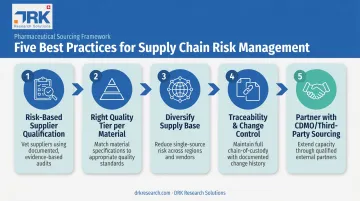
Establish Risk-Based Supplier Qualification
Start by auditing suppliers directly instead of relying on paperwork alone. A Certificate of Analysis tells you what a supplier claims. An audit tells you whether their systems can back that claim up.
- Verify the supplier's actual manufacturing site, not just a trading intermediary
- Confirm what "GMP" or "USP" claims actually mean for that specific supplier
- Cross-check CoA data against your own incoming testing periodically
Here's the catch many teams miss: a supplier whose core business is industrial chemicals may label a product "USP-grade" without operating under pharmaceutical GMP at all. Ask for evidence, not assurances.
Determine the Right Quality Tier for Each Material
Not every input needs full compendial documentation. A solvent used early in synthesis, purified out before the final API stage, doesn't require the same paperwork as an excipient going directly into a tablet.
- Map each material to its actual point of use in the process
- Assess how much it can affect the final product's critical quality attributes
- Reserve full GMP/USP documentation for materials with direct patient contact risk
Overpaying for unnecessary compliance paperwork on low-risk materials drains budget that should go toward higher-risk suppliers.
Diversify the Supply Base Without Regional Bias
There's a persistent myth that avoiding China or India automatically reduces risk. It doesn't.
FDA testimony from 2019 found 28% of API-manufacturing facilities supplying the US market were located domestically, 26% in the EU, 18% in India, and 13% in China (FDA congressional testimony, 2019). Quality problems have surfaced in every one of these regions.
- Qualify suppliers based on audit history and documented performance, not geography
- Build redundancy across at least two qualified sources per critical material
- Reassess supplier concentration annually, not just after a shortage hits
Build Traceability and Change-Control Systems
A raw material's paper trail should run unbroken from origin to finished dose.
- Document the actual manufacturer, not just the distributor on the invoice
- Require suppliers to commit contractually to notifying you before process changes
- Route every supplier, site, or specification change through formal change control (ICH Q10)
Unannounced supplier changes are one of the most common causes of unexpected batch failures. A written change-notification clause closes that gap before it becomes a recall.
Partner with Experienced Third-Party or CDMO Sourcing Partners
Smaller manufacturers often lack the leverage to negotiate audit access or combined purchasing power with global suppliers. Partnering with an established CDMO changes that equation.
- Combine purchasing volume across multiple client programs to secure better supplier terms
- Tap into existing audit relationships that established partners already maintain with qualified vendors
- Reduce the cost of failed batches through built-in reprocessing and reformulation capability
Navigating Regulatory and Compliance Requirements
ICH Q7 through Q11 form the backbone of global raw material GMP expectations, with each guideline addressing a distinct compliance requirement:
- Q7: Sets manufacturing controls for APIs
- Q8: Links material attributes to product quality
- Q9: Applies risk management proportionate to impact
- Q10: Makes the pharmaceutical company responsible for outsourced material quality
- Q11: Governs starting-material justification
Mandatory Safety Controls
Beyond the core framework, several specific controls apply depending on material type:
- Nitrosamine risk assessments across the synthesis route and packaging
- Elemental impurity limits under ICH Q3D, factoring in contributions from catalysts, equipment, and water
- Residual solvent controls under ICH Q3C(R9), with Class 1 solvents avoided entirely and Class 3 solvents capped at 50 mg/day under health-based exposure limits unless otherwise justified
Biological Material Requirements
Animal-derived and biologic raw materials carry additional obligations:
- TSE/BSE declarations detailing species, tissue, and geographic origin
- Viral safety data under ICH Q5A(R2), covering cell line selection, process clearance, and product testing
- EDQM TSE Certificates of Suitability where applicable
Emerging Compliance Areas
Sourcing teams increasingly need to track requirements outside the core ICH framework:
- REACH registration thresholds for chemical substances imported into the EU
- CITES permits for any material derived from regulated plant or animal species
- Nagoya Protocol compliance for genetic resources sourced from provider countries
- Allergen declarations tied to formulation labeling requirements
One easily overlooked detail: naming consistency. A material referenced by its INN in one document, its CAS number in another, and a different pharmacopeial name in the CoA creates confusion during inspections. Keep naming conventions aligned across specifications, CoAs, and regulatory dossiers.
Common Challenges in Pharmaceutical Raw Material Sourcing
Sourcing teams are navigating a more volatile landscape than they were even five years ago.
Supply concentration remains a structural risk. The European Economic and Social Committee estimated that up to 80% of APIs used in Europe originate from China or India. Geopolitical tension, export restrictions, or a single facility shutdown can ripple across multiple manufacturers simultaneously.
Falsified materials are a persistent threat. In 2024, the World Health Organization identified falsified USP/EP-labeled propylene glycol in Pakistan, contaminated with diethylene glycol, a substance capable of causing fatal poisoning (WHO Medical Product Alert, 2024).
WHO's recommendation was blunt: buy only from qualified suppliers and test every incoming batch of at-risk excipients, regardless of what the label claims.
Price volatility compounds both problems. Tariffs, regional supply shifts, and regulatory changes push raw material costs up unpredictably, straining manufacturing budgets and, in some cases, medication affordability for patients.
These pressures compound each other in practice:
- Single-source dependencies leave manufacturers with no backup when one region faces disruption
- Inconsistent testing standards across borders let falsified excipients pass as compliant
- Cost pressure tempts buyers to skip verification on "trusted" suppliers, which is exactly when problems emerge
How DRK Research Solutions Strengthens Raw Material Sourcing Outcomes
DRK Research Solutions supports generics and hybrid product development through its CDMO services, where DRK embeds raw material decisions directly into the formulation process. Ingredient selection during lab-scale formulation development isn't an afterthought. It's built alongside risk assessment and analytical method development from the start.
That analytical infrastructure matters for sourcing specifically. Methods validated to ICH and USP standards double as the tools used to test incoming raw material identity, purity, and potency. That gives clients a scientific basis for supplier qualification rather than just a paper certificate.
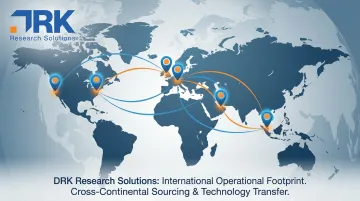
DRK's operational footprint spans Europe, the Middle East, Asia, Africa, and the Americas, with hubs including:
- Switzerland
- UK
- USA
- Malaysia
- UAE That regional presence supports technology transfer to EU- and US-approved manufacturing partners, where raw material specifications established during development need to hold consistently at commercial scale.
Consistent with its founding mission around patient access in low- and middle-income countries, DRK approaches sourcing conversations with an eye toward balancing quality against cost and availability. This balance matters most for manufacturers serving markets where both factors carry equal weight. Teams evaluating a CDMO partner for a generics program can reach DRK at info@drkresearch.com to discuss project-specific sourcing and qualification needs.
Frequently Asked Questions
Where do raw materials for pharmaceuticals come from?
Pharma raw materials come from chemical manufacturers, biological or natural sources, and specialized excipient producers worldwide. China and India remain major hubs for many APIs and intermediates, though facility distribution is broader than commonly assumed.
What are the 5 pillars of GMP?
Industry shorthand describes five pillars: quality management, personnel training, premises and equipment, documentation, and quality control testing. Regulators like the FDA formally organize inspections around a related but broader six-system model.
What is the difference between GMP-grade and USP-grade raw materials?
GMP governs a manufacturer's process controls and facility systems, while USP grade refers to meeting a specific compendial standard for identity, strength, and purity. A material can meet one without automatically satisfying the other.
Why is supplier qualification so important in pharmaceutical sourcing?
Qualification verifies that a supplier's quality systems, traceability records, and documentation practices actually hold up under scrutiny. Skipping this step is how contaminated or substandard materials enter otherwise compliant supply chains.
Are raw materials sourced from China safe for pharmaceutical use?
Safety depends on the specific supplier's quality systems and audit history, not the country of origin alone. Many essential pharmaceutical materials are predominantly manufactured in China, and plenty of those suppliers maintain rigorous quality standards.
What documentation should a raw material supplier provide?
Expect a Certificate of Analysis, facility and origin details, a change-notification commitment, and relevant safety declarations such as TSE/BSE statements or nitrosamine risk assessments. Missing any of these should be a red flag during qualification.