Many sponsors struggle with a familiar problem: a promising molecule that fails not because of poor efficacy, but because the delivery method can't get it where it needs to go, or patients simply stop using it. The global drug-delivery-device market alone is projected to grow from $463.8 billion in 2025 to $841.4 billion by 2033, according to Grand View Research, and that expansion is tightly linked to the rise of biologics, GLP-1 therapies, and biosimilars.
This article breaks down the top trends reshaping NDDS, what's fueling them, how they're changing the industry, and what to watch for next.
Key Takeaways
- NDDS is shifting toward targeted, connected, patient-first delivery systems
- Growth in biologics and GLP-1 therapies is driving demand for large-volume subcutaneous devices
- Digital health and sustainability requirements now shape device design from the start
- Early adopters gain real advantages in speed-to-market and patient adherence
Key Trends Shaping Novel Drug Delivery Systems
Five trends stand out right now, reflecting the collision of nanotechnology, biologics growth, and digital health. Together, they're redefining how drugs are formulated, packaged, and delivered.
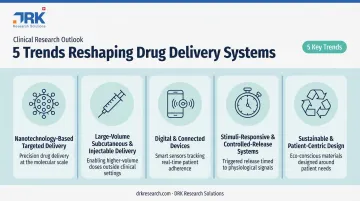
Nanotechnology-Based Targeted Delivery
Nanocarriers (liposomes, polymeric nanoparticles, micelles, and dendrimers) encapsulate a drug so it can reach a specific site in the body while shielding the active ingredient from degradation along the way. This isn't experimental anymore.
Approved products already prove the concept. Doxil, an FDA-labeled liposomal doxorubicin injection, remains in use for recurrent ovarian cancer, and lipid nanoparticles (LNPs) carry the mRNA payload in Spikevax, per EMA product documentation.
The nanomedicine market was valued at $190.58 billion in 2023 and is projected to hit $410.15 billion by 2030, growing at an 11.6% CAGR, according to Grand View Research. A 2025 clinical review also found liposomal doxorubicin carried a meaningfully lower heart-failure risk than the conventional formulation: a product-specific result, but a clear signal of what targeted encapsulation can achieve.
Large-Volume Subcutaneous & Advanced Injectable Delivery
Nanocarriers solve one delivery challenge, but biologics present another: they don't fit neatly into a 1 mL syringe. As monoclonal antibodies and GLP-1 therapies scale, delivery technology has had to catch up.
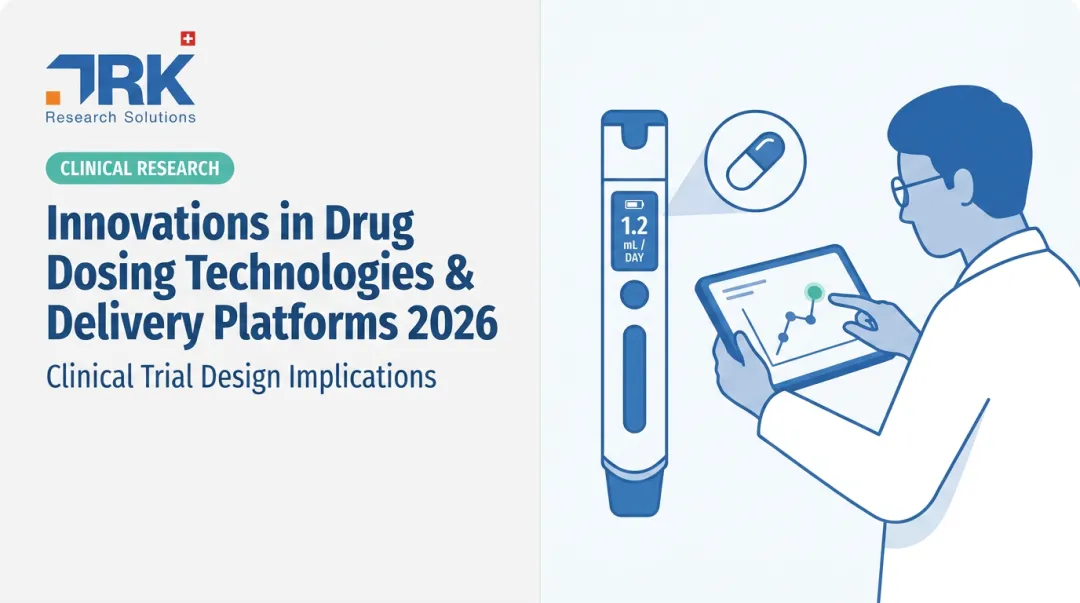
Handheld autoinjectors now administer volumes up to 2.0 mL in under 15 seconds, per a 2024 clinical review. For larger doses, on-body infusors have entered the picture: FDA's FUROSCIX label specifies 80 mg in 10 mL delivered over five hours via a single-use wearable device.
This shift matters because:
- Self-administration reduces clinic visits for chronic disease patients
- Larger payloads mean fewer injections per treatment cycle
- Device design is now a competitive differentiator, not an afterthought
The biologics market itself is projected to grow from $487 billion in 2025 to $1.24 trillion by 2035, according to Precedence Research, a pace that keeps pressure on delivery-device innovation.
Digital & Connected Drug Delivery Devices
Smart autoinjectors and sensor-equipped pens are being built to track dosing accuracy and sync with patient apps. Novo Nordisk's NovoPen 6 automatically records each insulin injection. Merck's easypod connected device supports growth-hormone therapy adherence tracking. MiniMed Go sends dosing data straight to a companion app.
FDA's 2024 guidance on digital health technologies for remote data acquisition supports using these tools to collect fit-for-purpose clinical trial data remotely. That's a meaningful regulatory signal. It doesn't mean every connected injector automatically generates regulatory-grade real-world evidence; the data still has to meet specific study design and quality standards.
Stimuli-Responsive & Controlled-Release Systems
These systems release a drug in response to a trigger, whether that's pH, enzymes, or simply time, cutting down how often a patient needs to dose. Implants and depot injections are the clearest commercial examples.
Nexplanon, a hormonal implant, now has an extended five-year duration of use. Invega Hafyera, a twice-yearly paliperidone depot injection for schizophrenia, showed 92.5% of patients relapse-free at 12 months, according to Janssen's FDA approval announcement, compared with 95% for the quarterly version.
Given that oral antipsychotic nonadherence ranges from 30% to 77% in published research, the appeal of reducing dosing frequency to twice a year is easy to understand. Note: fully stimuli-triggered systems (pH- or enzyme-activated) remain largely research-stage; the commercial wins so far are sustained-release depots and implants.
Sustainable & Patient-Centric Device Design
Reusable pen injectors, like Sanofi's AllStar PRO and Novo Nordisk's NovoPen 6, are gaining traction as sponsors look to reduce single-use plastic waste. Regulatory pressure is real: the EU's Packaging and Packaging Waste Regulation (2025/40) requires that all packaging be recyclable in an economically viable manner by 2030, according to the official EU regulation text. Pharmaceutical packaging carries some exceptions, but the direction of travel is clear.
This is pushing sponsors to co-design devices with actual patient input, not just engineers, prioritizing usability alongside environmental compliance.
What's Driving These Novel Drug Delivery Trends
A mix of scientific, commercial, and regulatory forces is accelerating change across the DDS space.
- Technology advances: Nanotechnology and biomaterials science are maturing fast, reflected in that 11.6% nanomedicine CAGR
- Market demand: Patients and payers increasingly expect home administration and reduced treatment burden, particularly for chronic conditions
- Cost pressures: PhRMA estimates drug development takes 10-15 years and costs roughly $2.6 billion per approved therapy
- Approval risk: Only 12% of clinical-stage candidates ever reach approval, making platform technologies attractive for spreading that risk
- Regulatory influences: FDA's 2024 "Essential Drug Delivery Outputs" guidance now addresses delivery-performance requirements specifically for combination products
- Competitive dynamics: IQVIA reports biosimilars have captured nearly half of immunology biologic volume in developed markets, pushing originator companies to differentiate through delivery innovation rather than the molecule alone
How These Trends Are Impacting the Pharmaceutical Industry
These shifts are changing how companies plan, invest, and staff their development programs.
Operational Impact
Sponsors are pulling formulation and device development earlier into the drug development lifecycle rather than treating delivery as a late-stage decision. There's also growing reliance on platform-based, pre-validated technologies (think standard autoinjector platforms rather than bespoke device engineering) to avoid reinventing the wheel for every program.
Business Impact
Sponsors increasingly favor strategic partnerships with experienced CROs to manage the moving parts: formulation development, analytical testing, regulatory dossier preparation, and multi-regional compliance.
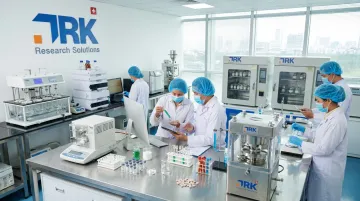
This is where firms like DRK Research Solutions fit in, supporting sponsors through lab-scale formulation development, dissolution and stability testing, and eCTD dossier preparation for complex or hybrid formulations. DRK also coordinates with GMP-compliant manufacturing partners to handle scale-up.
Investment priorities are also shifting toward digital and sustainability features as differentiators, especially in crowded categories like GLP-1s and biosimilars where the molecule alone no longer wins the market.
Workforce Impact
Delivery-focused programs now demand cross-functional expertise: formulation scientists working alongside device engineers and digital health specialists. Human factors engineering and connected-device data management are emerging as specialized functions within drug delivery teams — often filled through a combination of internal hires and partner networks, depending on the sponsor's size and program complexity.
Future Signals for Novel Drug Delivery Systems
Watch for these developments over the next one to three years:
- AI-assisted formulation design: A 2024 Nature Communications study showed generative AI modeling drug products from example images, a step toward faster predictive formulation (still research-stage, not a regulatory shortcut)
- Next-generation biodegradable implants: A 2023 study reported an injectable, removable cabotegravir implant lasting six-plus months, pointing to where long-acting technology is headed
- Expanded platform autoinjectors: The YpsoMate 5.5, built for a 5.5 mL prefilled syringe, shows vendors preparing for increasingly complex biologic volumes
- Broader LMIC access: The WHO cites Brazil, India, and South Africa as expanding biosimilar access, signaling that delivery platforms must follow biologics into underserved markets as they scale globally
Conclusion
From nanocarriers to connected injectors, novel drug delivery trends are collectively redefining how therapies reach patients safely and efficiently. Companies that adapt early to targeted delivery, sustainable design, and digital integration gain a real edge in speed-to-market and patient outcomes.
Navigating these shifts, especially across multiple regulatory jurisdictions and emerging markets, is rarely a solo effort. Partnering with an experienced CRO like DRK Research Solutions helps bridge that gap. The company supports formulation development, analytical testing, and regulatory dossier preparation across Europe, the Middle East, Asia, Africa, and the Americas. This regional reach helps sponsors bring novel delivery innovations to patients in underserved regions who need them most.
Frequently Asked Questions
What does novel drug delivery system mean?
Novel drug delivery systems are advanced technologies designed to control the rate, timing, and site of drug release in the body. They aim to improve efficacy and reduce side effects, often boosting patient compliance compared to conventional oral or injectable methods.
What are examples of novel drug delivery systems?
Common examples include liposomes and lipid nanoparticles, polymeric nanoparticles, transdermal patches, long-acting implants, depot injections, and connected autoinjectors that sync with patient apps.
What is the difference between traditional and novel drug delivery methods?
Traditional routes, such as oral tablets or standard injections, release a drug quickly with limited control over targeting. Novel systems offer site-specific targeting and controlled release over time, often paired with digital monitoring of dosing and adherence.
What are the main challenges in adopting novel drug delivery systems?
Key barriers include regulatory complexity around combination products and difficulty scaling manufacturing for complex formulations. Development costs also tend to run higher than conventional dosage forms.
How do novel drug delivery systems improve patient compliance?
Reduced dosing frequency, such as a twice-yearly injection instead of a daily pill, helps patients stay on therapy longer. Simpler self-administration and digital adherence tracking provide additional support.
What role do CDMOs play in developing novel drug delivery systems?
CDMOs support formulation development, analytical method validation, technology transfer, and manufacturing scale-up. They also help sponsors prepare regulatory dossiers, which speeds up the path from lab-scale development to market.