Many sponsors struggle with the same problem: skin isn't a simple barrier to push a drug through. It's a living, variable, hard-to-model organ. Add in strict bioequivalence rules and finicky formulation requirements, and it's easy to see why generic competition for topical drugs has lagged behind other categories, keeping treatment costs elevated for patients.
This article breaks down the delivery technologies, regulatory pathways, and formulation science reshaping the field, and how specialized development partners are helping sponsors move faster from bench to patient.
Key Takeaways
- Skin barrier physiology and strict "sameness" standards make dermatological drugs uniquely hard to develop
- Nanocarriers, microneedles, and biologics are shifting treatment from broad-spectrum creams to precision therapy
- FDA pathways like Q1/Q2/Q3, IVRT, and IVPT are cutting reliance on expensive clinical bioequivalence trials
- Experienced global CRO/CDMO partners help sponsors navigate multi-region regulatory nuance and shorten timelines
What Are Dermatological Drugs? Understanding the Landscape
Dermatological drugs are topical, transdermal, or systemic therapies designed to treat skin conditions such as psoriasis, acne, eczema, rosacea, and cutaneous infections. Most act locally, at or near the site of application, rather than circulating through the bloodstream the way an oral tablet does.
The category covers a wide range of dosage forms, including:
- Creams, ointments, and lotions
- Gels, foams, and sprays
- Medicated shampoos and pastes
- Transdermal patches and cutaneous plasters
According to the EMA's guideline on topical products, these forms are defined by local action on the skin. Transdermal systems are different: the FDA classifies them as drug-device combination products because the active ingredient is designed to cross into systemic circulation.
This category also spans prescription drugs, over-the-counter monograph products, and hybrid drug-device combinations, each with its own regulatory expectations. That variety is exactly why innovation here looks so different from oral or injectable drug development, and the rest of this article breaks down exactly how.
Cutting-Edge Innovations Reshaping Dermatological Drug Product Development
Key Innovations Reshaping Dermatological Drug Product Development
Innovation in dermatology is moving on three fronts at once: new ways to get drugs into skin, new biologic mechanisms once thought too complex for topical use, and digital tools that compress formulation timelines.
Advanced Delivery Technologies
Getting an active ingredient through the stratum corneum, skin's outermost barrier, has always been the central challenge in topical formulation. Newer delivery platforms are chipping away at that problem:
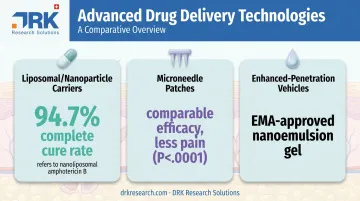
- Liposomal and nanoparticle carriers encapsulate actives to improve penetration and stability. A pilot study of topical nanoliposomal amphotericin B 0.4% for cutaneous leishmaniasis reported a 94.7% complete cure rate, prompting a phase 3 recommendation.
- Microneedle patches bypass the stratum corneum with micron-scale projections. A randomized trial comparing a bleomycin microneedle patch to cryotherapy for warts found comparable efficacy with significantly less pain (P < .0001).
- Enhanced-penetration vehicles, including nanoemulsions like the EMA-approved Ameluz 78 mg/g gel for actinic keratosis, are already on the market and proving the concept at commercial scale.
The investment behind this shift is substantial. Grand View Research valued the global topical-drugs market at $190.5 billion in 2024, projecting growth to $269.3 billion by 2030, a 6.0% compound annual growth rate. That figure spans more than dermatology alone, but it signals how much capital is chasing better delivery science.
Biologics and Targeted Therapies
Dermatology used to mean broad-spectrum topicals. That's changing fast. Biologics and targeted small molecules are now standard of care for moderate-to-severe disease:
- Dupixent (dupilumab), approved 2017, blocks IL-4 receptor alpha for atopic dermatitis
- Skyrizi (risankizumab-rzaa), approved 2019, targets IL-23 for plaque psoriasis
- Opzelura (ruxolitinib cream), approved 2021, brought a topical JAK inhibitor to market
- Vtama (tapinarof cream), approved 2022, works through the aryl hydrocarbon receptor
Precision comes at a cost, though. Biologics introduce new manufacturing complexity: cold-chain logistics, protein stability concerns, and specialized facilities that a standard semi-solid manufacturing line simply isn't built for.
Digital and AI-Driven Formulation Tools
Computational modeling is changing how formulators work before a single batch hits the lab bench. In silico permeation prediction and AI-assisted excipient selection are shrinking the guesswork out of early formulation.
One published example: researchers used Gaussian-process regression to predict ibuprofen permeation from poloxamer-407 gels, cutting down on the number of required 24-hour in vitro permeation test experiments. Bayesian optimization then identified an optimal formulation in just four experimental runs.
Separately, physiologically based pharmacokinetic modeling platforms like GastroPlus TCAT simulate dermal drug concentrations for products such as clobetasol propionate cream, giving formulators a predictive tool before committing to costly IVPT studies.
Regulatory Innovations Accelerating Dermatology Drug Approvals
Formulation science hasn't evolved alone. Regulators have built new pathways that reduce, though don't eliminate, reliance on lengthy clinical bioequivalence trials.
Complex Generics and the Q1/Q2/Q3 Framework
The FDA's sameness framework gives generic sponsors a science-based route to bioequivalence:
- Q1 (qualitative sameness) - same components as the reference product
- Q2 (quantitative sameness) - same components in the same concentrations
- Q3 (physicochemical similarity) - matching physical and structural properties, such as microstructure and rheology
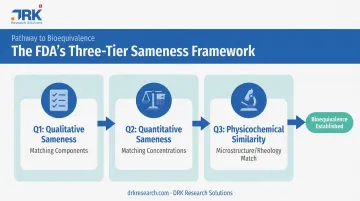
When Q1/Q2/Q3 can be established, sponsors may avoid clinical endpoint trials entirely. FDA workshop materials show acyclovir ointment and silver sulfadiazine cream supported through Q1/Q2/Q3 combined with in vitro release testing (IVRT). Acyclovir cream 5% relied on Q1/Q2/Q3 plus both IVRT and in vitro permeation testing (IVPT).
For corticosteroids like clobetasol propionate, the FDA's product-specific guidance recommends vasoconstrictor assay studies instead.
MoCRA and the Shifting Drug-Cosmetic Boundary
The Modernization of Cosmetics Regulation Act, enacted December 29, 2022, tightened safety expectations for products sitting at the drug-cosmetic boundary. Key requirements include:
- Mandatory safety substantiation records for responsible persons
- Serious adverse event reporting to FDA within 15 business days
- Enforcement of these reporting rules effective December 29, 2023
For sponsors developing cosmeceutical or combination dermatology products, this changes how excipients get selected and how product claims get positioned, since crossing into "drug" territory triggers a separate regulatory regime entirely.
Evolving FDA Guidance (MUsT, IVRT/IVPT, QbD)
Three tools are giving sponsors more predictable, science-driven approval pathways:
- Maximal Usage Trials (MUsT) assess systemic exposure under worst-case use conditions for OTC topical actives
- IVRT and IVPT guidance, both updated in October 2022, formalize how comparative release and permeation testing can support ANDA bioequivalence
- Quality by Design (QbD), adopted by FDA per ICH Q8(R2) since 2009, builds quality into the process from the start rather than testing it in afterward
Together, these frameworks let sponsors substitute rigorous in vitro and modeling data for large-scale clinical trials, cutting both development time and cost for generic dermatology products.
Formulation and Bioequivalence Challenges Innovators Must Solve
Even with new pathways available, topical products remain stubbornly difficult to get right. Physical instability, including phase separation and crystallization, and chemical degradation from oxidation or photolysis, can derail a promising formulation late in development.
Pharmacokinetic factors that determine success:
- Molecular size and solubility of the active ingredient
- Vehicle composition and how it interacts with the skin barrier
- Condition of the skin itself (broken, inflamed, or intact)
Beyond the formulation itself, container-closure compatibility and microbial control remain persistent hurdles, particularly for multi-dose or pediatric-use products where preservative systems must work harder over longer use periods.
These formulation hurdles compound further when sponsors must prove bioequivalence to a reference product. When Q1/Q2/Q3 sameness can't be established, generic sponsors are often pushed back into resource-intensive combined in vitro and clinical endpoint studies.
FDA has acknowledged that topical dermatological drugs make up a large share of products still lacking approved generic equivalents. Systemic pharmacokinetics simply don't reliably reflect drug concentration at the actual site of action in skin. Two Q1/Q2-equivalent products can still behave differently once microstructure and manufacturing variables come into play.
Partnering with a Global CRO/CDMO to Accelerate Dermatological Innovation
Formulation complexity and shifting regulatory expectations are hard enough to manage in one jurisdiction. Multiply that across several regions, and sponsors need a development partner who's actually worked inside those systems.
This is where a global CRO/CDMO model earns its keep. DRK Research Solutions, for example, has spent over a decade supporting generics and hybrid product development for regulated markets, with a 100+ person team spanning Europe, the Middle East, Asia, Africa, and the Americas.
That footprint includes offices across Switzerland, the UK, USA, Pakistan, Malaysia, Nepal, and the UAE.
What this looks like in practice:
- Lab-scale formulation development and optimization, built with regulatory foresight from the start
- Analytical method development validated to ICH and USP standards
- Technology transfer from development into exhibit and commercial manufacturing
- eCTD dossier preparation across Modules 2 through 5, supporting multi-market submissions
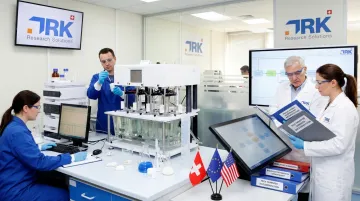
DRK's regulatory consultants carry a track record spanning EU GMP, MHRA, PIC/S, WHO PQ, and US FDA frameworks, backed by partnerships with EU- and US-approved manufacturing facilities.
For sponsors running multi-regional clinical trials or compiling CMC documentation across jurisdictions, that combination of global reach and localized regulatory fluency is often what keeps a program from stalling over regional nuance nobody anticipated.
Beyond the regulatory credentials, DRK's roots as a patient advocacy organization still show through its focus on underserved and low- and middle-income country markets, where access to modern dermatological therapy has historically lagged furthest behind. Sponsors weighing a development partner for a topical or transdermal program can reach out directly to discuss project-specific needs.
Frequently Asked Questions
What are dermatological drugs?
Dermatological drugs are topical, transdermal, or systemic products used to treat skin conditions, delivered as creams, gels, ointments, or patches. Most act locally at the site of application rather than circulating systemically.
What are some recently FDA-approved drugs in dermatology?
Recent approvals include Anzupgo (delgocitinib cream) in July 2025 for chronic hand eczema, Sofdra (sofpironium gel) in June 2024 for axillary hyperhidrosis, and Zelsuvmi (berdazimer gel) in January 2024 for molluscum contagiosum. Details are available in FDA's Novel Drug Approvals database.
What makes dermatological drug development different from other drug categories?
Skin barrier permeability, local versus systemic action, and product "look-and-feel" create formulation and testing challenges rarely seen in oral or injectable drugs. Even matching a reference product's texture and spreadability can affect regulatory acceptance.
Why is bioequivalence testing so challenging for topical generic drugs?
Systemic blood levels often don't reflect drug concentration at the actual site of action in skin. That mismatch forces sponsors toward specialized in vitro release and permeation testing, or clinical endpoint studies, instead of standard pharmacokinetic comparisons.
What is MoCRA and how does it affect dermatology drug developers?
MoCRA is a 2022 U.S. law strengthening cosmetic safety substantiation and adverse event reporting requirements. It matters for dermatology developers because many products sit right at the drug-cosmetic boundary, where classification affects the entire regulatory pathway.
How long does it typically take to bring a new dermatological drug to market?
Timelines vary widely by pathway. Generic ANDAs can move in a few years under GDUFA review goals, while novel biologics and NDAs often take a decade or more once clinical and CMC requirements are factored in.